Nils Bennett · 5 September 2026
The Intersection of Indigenous Storytelling and Modern Soundscapes in Remote Canyon Celebrations
Indigenous communities across the American Southwest have long gathered in remote canyons to share oral histories through spoken word, song, and rhythm, and recent decades show these practices expanding to incorporate digital audio tools, spatial sound design, and electronic instrumentation that reshape how stories reach audiences in natural amphitheaters formed by rock walls.
Traditional Foundations Meet Contemporary Audio Practices
Observers note that groups such as the Navajo, Hopi, and Zuni maintain storytelling cycles tied to seasonal cycles and sacred geography, where canyon acoustics amplify voices without amplification, yet practitioners now layer field recordings of wind and water with synthesized tones and multi-channel playback systems to extend narrative reach across larger gatherings. Research from academic institutions documents how these adaptations preserve linguistic structures and moral lessons while adjusting volume dynamics and echo patterns that the stone formations naturally produce.
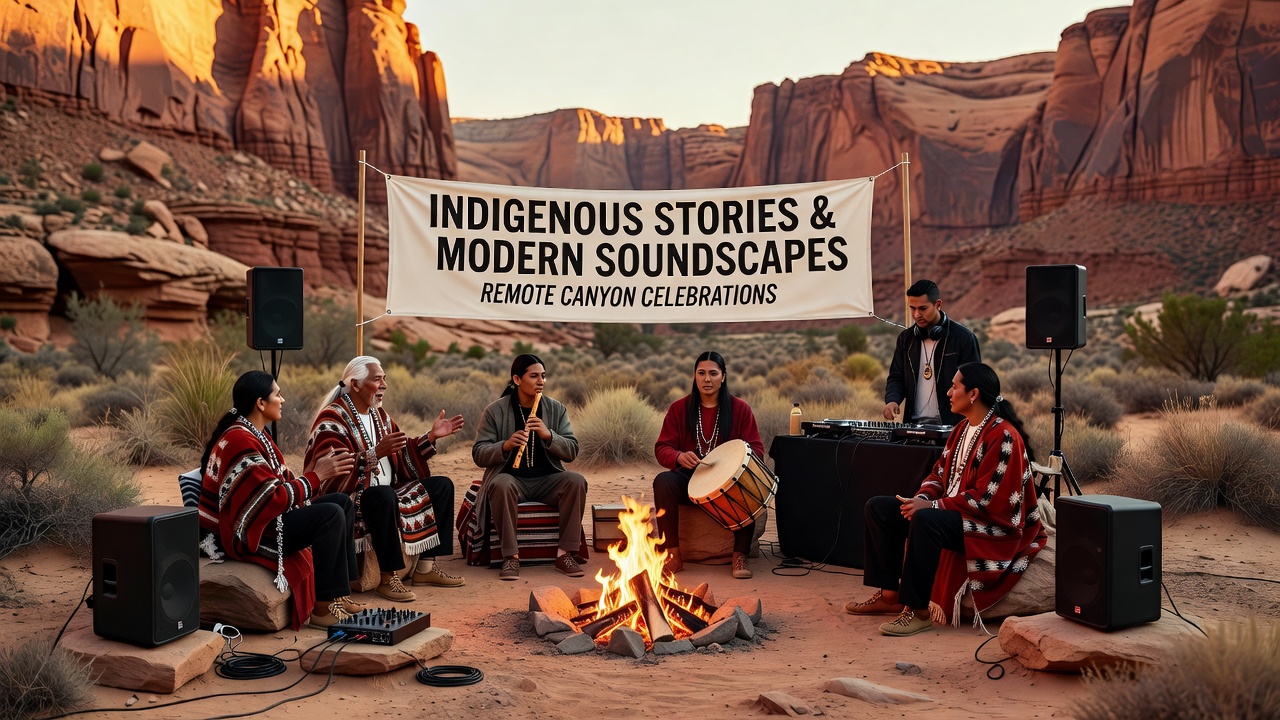
Events scheduled for September 2026 will feature coordinated installations at sites including remote sections of Canyon de Chelly and similar protected areas, where organizers combine battery-powered speaker arrays with live drumming circles to create layered soundscapes that move between ancient chants and processed ambient textures.
Acoustic Design in Natural Settings
Sound engineers working alongside cultural advisors calibrate delay times and frequency responses to match the reflective properties of sandstone and basalt, producing immersive environments where a single storyteller's voice can trigger pre-recorded responses from hidden speakers positioned along canyon rims. Data collected by university field studies indicates that such setups increase participant retention of key narrative elements by aligning auditory cues with visual landmarks visible at twilight.
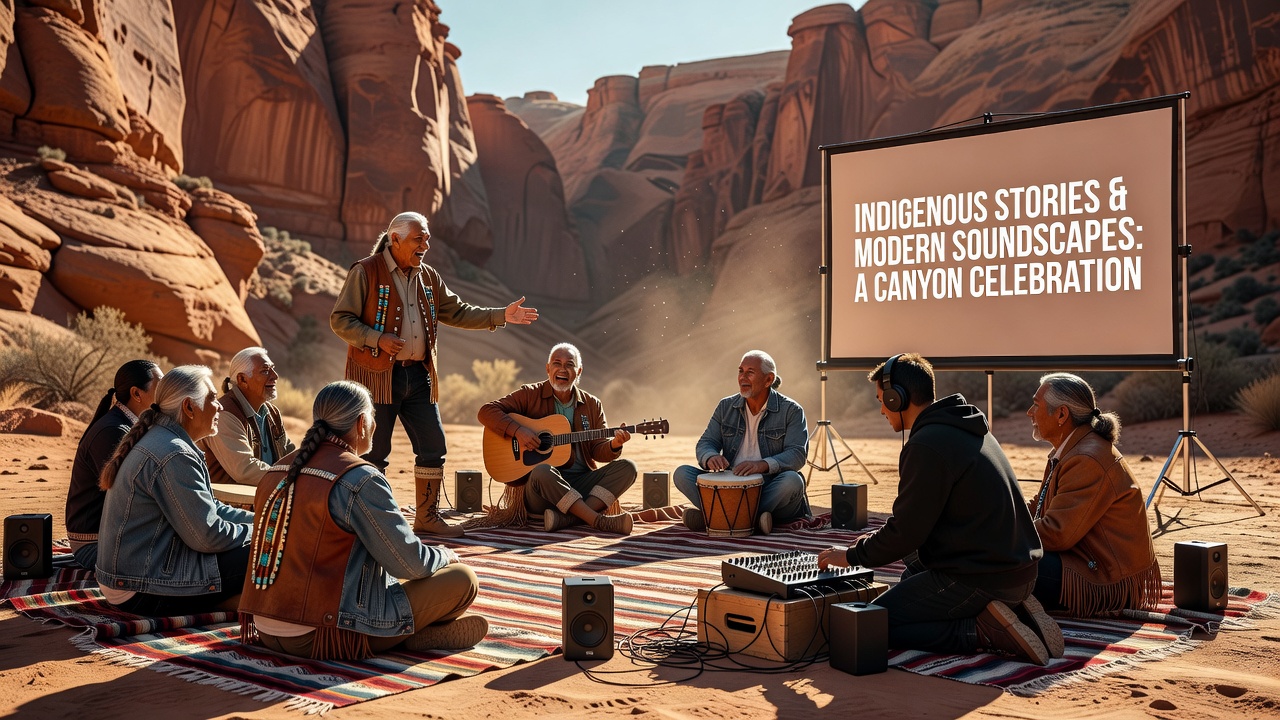
One documented case involved a multi-night celebration where electronic drones derived from traditional flute scales underscored spoken accounts of migration routes, allowing listeners positioned hundreds of meters apart to experience synchronized elements through careful speaker placement that accounts for wind direction and temperature gradients common in high-desert evenings.
Those who coordinate these programs often reference acoustic mapping techniques developed by research teams at institutions across North America, applying data on reverberation times to avoid distortion while maintaining the intimate scale that canyon walls provide naturally.
Community Participation and Technical Integration
Local elders collaborate with audio technicians to determine which stories translate effectively to amplified formats, ensuring that sacred content remains restricted to appropriate audiences while public segments incorporate interactive elements such as motion-triggered sound triggers that respond to dancers moving through designated zones. Figures from cultural resource management reports show rising attendance at these hybrid events, with participants traveling from urban centers to experience the blend of heritage transmission and technological enhancement.
Equipment lists typically include portable digital mixers, wireless microphones adapted for outdoor use, and solar charging stations that support extended runs without reliance on grid power, reflecting practical adaptations to locations far from infrastructure. And yet the core remains the transmission of knowledge through voice, where modern tools serve as extensions rather than replacements for direct human delivery.
Regional Variations and Scheduled Activities
Across different canyon systems, approaches vary according to local ecology and community protocols, with some groups emphasizing percussive elements augmented by synthesized bass frequencies that travel through the earth itself, while others focus on melodic overlays that echo off curved walls to simulate multiple voices in dialogue. Preparations for September 2026 gatherings include workshops on open-source software for real-time spatial audio panning, allowing younger community members to contribute technical skills alongside traditional knowledge holders.
According to resources available through the National Park Service, management guidelines for cultural events in protected canyon areas stress minimal impact protocols that these sound installations follow by using directional speakers and temporary cabling that leaves no permanent traces. A separate academic overview hosted by the University of British Columbia details parallel practices in other mountainous regions, highlighting shared challenges in balancing amplification needs with environmental acoustics.
Conclusion
The ongoing development of these celebrations demonstrates measurable continuity between longstanding oral traditions and evolving sound technologies, with each September cycle introducing refinements based on prior outcomes and participant feedback collected through structured interviews. Communities continue to refine the technical and cultural balance, producing events that transmit stories across generations while adapting to contemporary tools and audience expectations in remote natural settings.