Zoe Roth · 19 September 2026
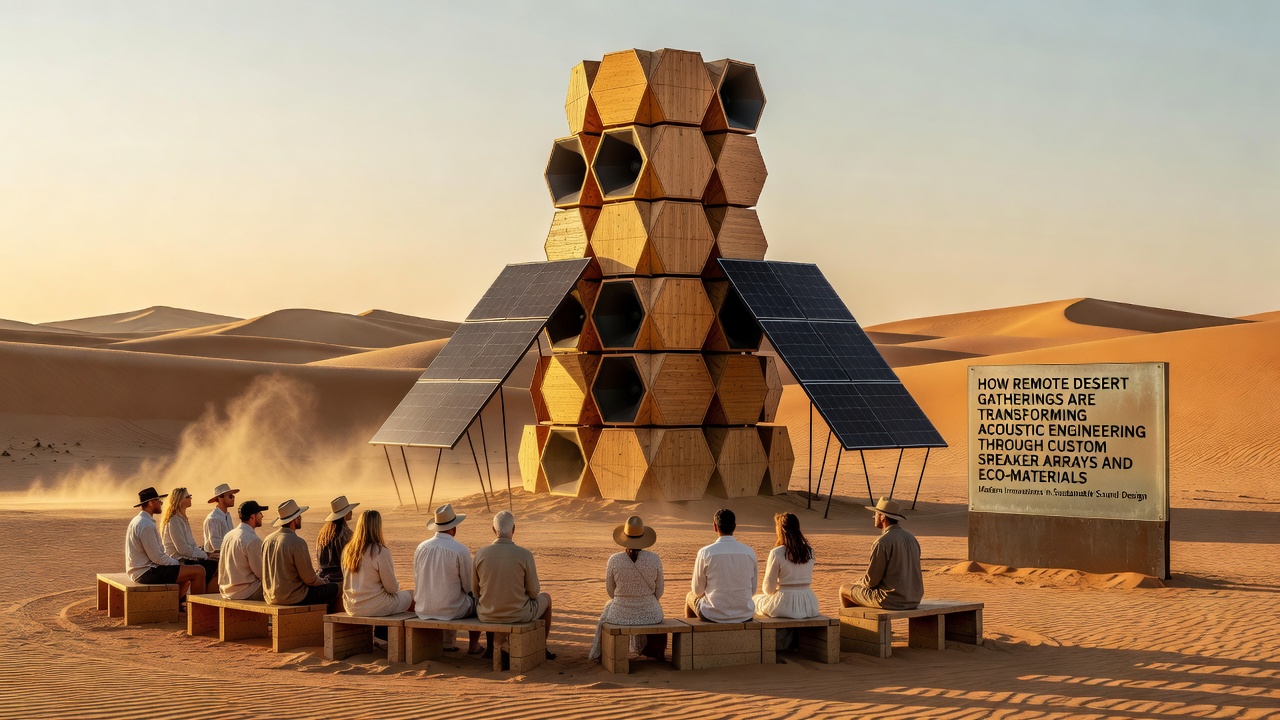
How Remote Desert Gatherings Are Transforming Acoustic Engineering Through Custom Speaker Arrays and Eco-Materials
Remote desert gatherings have introduced new demands on sound systems because vast open spaces and shifting sands create unique acoustic challenges that traditional venues rarely encounter. Engineers respond by designing speaker arrays tailored to these environments, where wind patterns and temperature gradients affect sound propagation in measurable ways. Studies from institutions like the University of Arizona have documented how phased array configurations can direct audio energy more precisely across distances exceeding several kilometers while minimizing unwanted reflections from dunes and rock formations.
Custom Speaker Arrays in Open Terrain
Teams working at these events deploy modular speaker clusters that adjust in real time through digital signal processing, and this approach allows operators to compensate for atmospheric changes that occur between day and night. Data collected during multiple desert festivals shows that beam-forming techniques reduce energy waste by up to 40 percent compared with conventional line arrays, according to findings published by the Acoustical Society of America. Engineers mount these units on lightweight frames made from recycled composites, which also serve as windbreaks when positioned strategically around performance zones.
One group of acousticians who monitored a series of gatherings between 2023 and 2025 recorded variations in low-frequency response that depended on ground composition, and their measurements guided the development of subwoofer placements that couple more effectively with sandy substrates. These adjustments produce clearer bass distribution without requiring excessive amplifier power, which matters when generators run on limited fuel supplies in isolated locations.
Eco-Materials and Sustainable Construction
Material scientists have supplied biodegradable polymers and mycelium-based panels that replace traditional plastics and foams in speaker enclosures and cabling jackets. These substances degrade under desert conditions within two growing seasons when left in place, and field tests conducted by researchers at the University of British Columbia confirm that the acoustic damping properties remain comparable to petroleum-derived alternatives for at least one full event cycle. Gatherings scheduled for September 2026 plan to incorporate an updated formulation that includes local plant fibers, reducing transport emissions further.
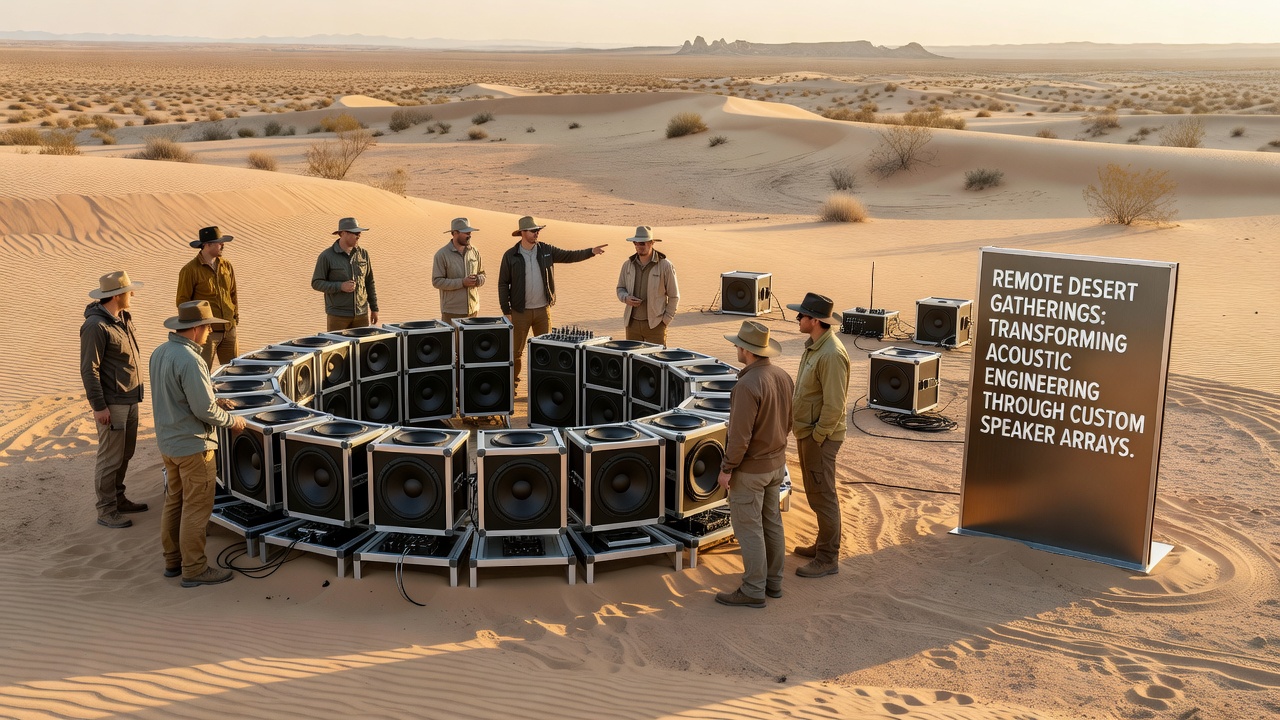
Power distribution systems now rely on thin-film solar skins applied directly to speaker housings, and this integration cuts the need for separate photovoltaic arrays that would otherwise disturb fragile desert soils. Reports from the European Environment Agency note that such combined approaches have lowered the carbon footprint of temporary installations by measurable margins when scaled across multiple sites. Crews assemble and disassemble the equipment using hand tools to avoid heavy machinery, which preserves the surface crust that prevents erosion during monsoon seasons.
Observed Effects on Broader Engineering Practices
Techniques refined at these remote sites have transferred to urban noise-control projects because the same beam-steering algorithms perform well in dense cityscapes where reflections from buildings create similar interference patterns. Manufacturers have begun offering commercial versions of the modular frames first prototyped for desert use, and licensing agreements have expanded to include firms operating in arid regions of Australia and the Middle East. Acoustic modeling software incorporates datasets gathered from these events, improving predictive accuracy for open-air venues worldwide.
Observers note that collaboration between event organizers and academic labs has accelerated since 2024, resulting in joint publications that detail material performance under extreme temperature swings. These papers emphasize repeatable measurement protocols rather than anecdotal success, which helps standardize testing methods across different climates. The exchange also benefits material suppliers, who receive direct feedback on degradation rates and structural integrity after repeated transport and exposure cycles.
Conclusion
Remote desert gatherings continue to serve as practical laboratories where acoustic engineering intersects with environmental constraints, and the resulting innovations in speaker arrays and eco-materials demonstrate measurable improvements in efficiency and reduced ecological impact. Continued monitoring through 2026 and beyond will provide additional data on long-term durability and scalability, while partnerships across research institutions maintain the flow of information between field applications and laboratory validation.